
General Information
The world’s first faculty of electrical engineering was founded here.
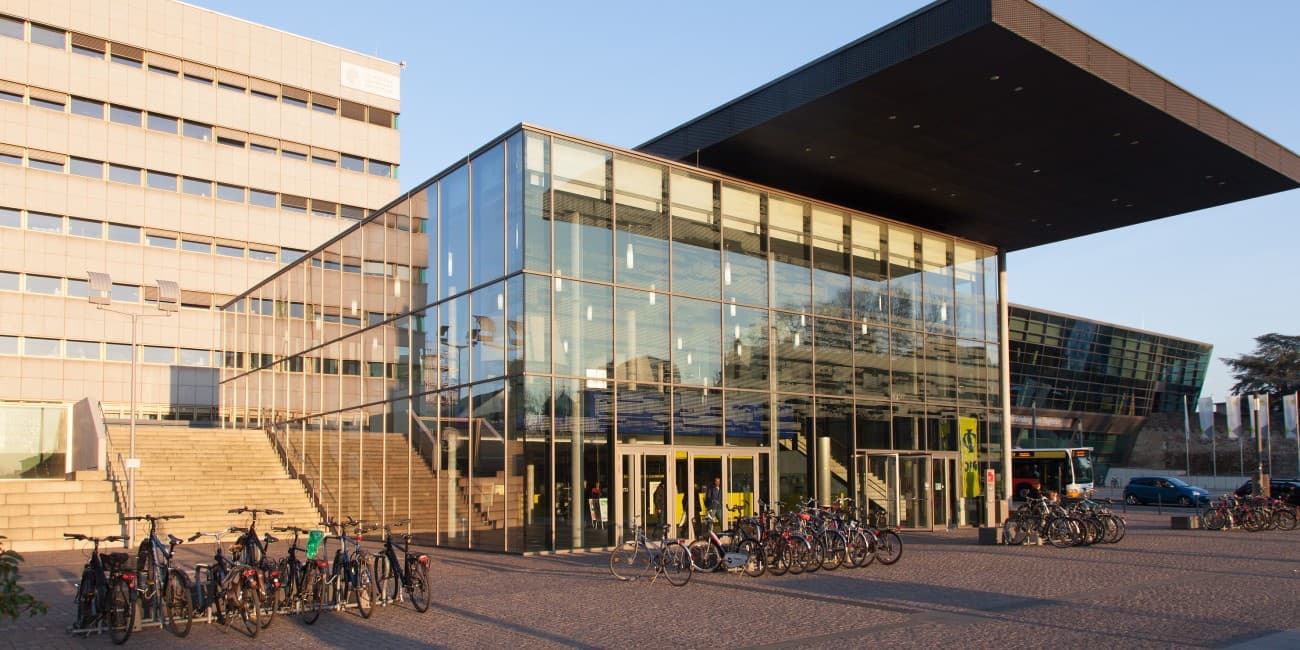
Darmstadt University of Technology, or TU Darmstadt for short, is a research university located in the city of Darmstadt, Germany, and adds colour to the city with its botanical garden and open-air swimming pool. Founded in 1877, Darmstadt University of Technology gained the right to award doctoral degrees in 1899.
A total of 25,889 students study at TU Darmstadt, and international students make up approximately of them. In addition, the school has a teaching staff of 2,593, including a total of 309 professors, 253 women and 56 men. The university, which teaches at 5 locations, has 164 buildings, and a total of 113 programmes are taught in 13 faculties housed in these buildings.
With the Faculty of Electrical Engineering it opened in 1883, Darmstadt University of Technology holds the title of the first university in the world to teach electrical engineering and open a faculty in this field. People who graduated from this university, which Albert Einstein also recommended in one of his sayings, have won 2 Nobel Prizes and 2 Leibniz Prizes.
Darmstadt University of Technology is part of a network called TU9, which includes Germany’s most respected technical universities, and is among the world’s leading universities in the field of Mechanical Engineering. According to the QS 2019 world university rankings, TU Darmstadt was among the top 100 universities in the world in the field of Mechanical Engineering.
DARMSTADT UNIVERSITY OF TECHNOLOGY DEPARTMENTS
| Computer Engineering | 3 Years | German | Bachelor’s |
| Biomolecular Engineering | 3 Years | German | Bachelor’s |
| Electrical Engineering and Information Technology | 3 Years | German | Bachelor’s |
| Biology | 3 Years | German | Bachelor’s |
| Industrial Engineering | 3 Years | German | Bachelor’s |
| Civil Engineering | 3 Years | German | Bachelor’s |
| Physics | 3 Years | German | Bachelor’s |
| Architecture | 3 Years | German | Bachelor’s |
| Mechanical Engineering | 3 Years | German | Bachelor’s |
| Materials Science | 3 Years | German | Bachelor’s |
| Chemistry | 3 Years | German | Bachelor’s |
| Mathematics | 3 Years | German | Bachelor’s |
| Mechatronics | 3 Years | German | Bachelor’s |
| Psychology | 3 Years | German | Bachelor’s |
| Political Science | 3 Years | German | Bachelor’s |
| Sociology | 3 Years | German | Bachelor’s |
| History | 3 Years | German | Bachelor’s |
| Medical Technology | 3 Years | German | Bachelor’s |
| Applied Mechanics | 3 Years | German | Bachelor’s |
| Software Engineering | 3 Years | German | Bachelor’s |
ADMISSION REQUIREMENTS
- Applications must be made directly on the university’s official website. In addition, German language proficiency is required for all departments.
-

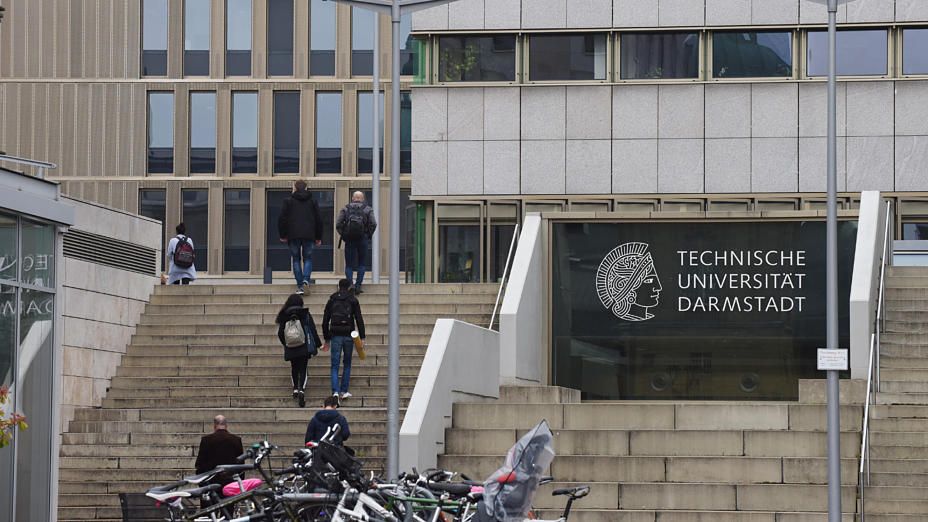
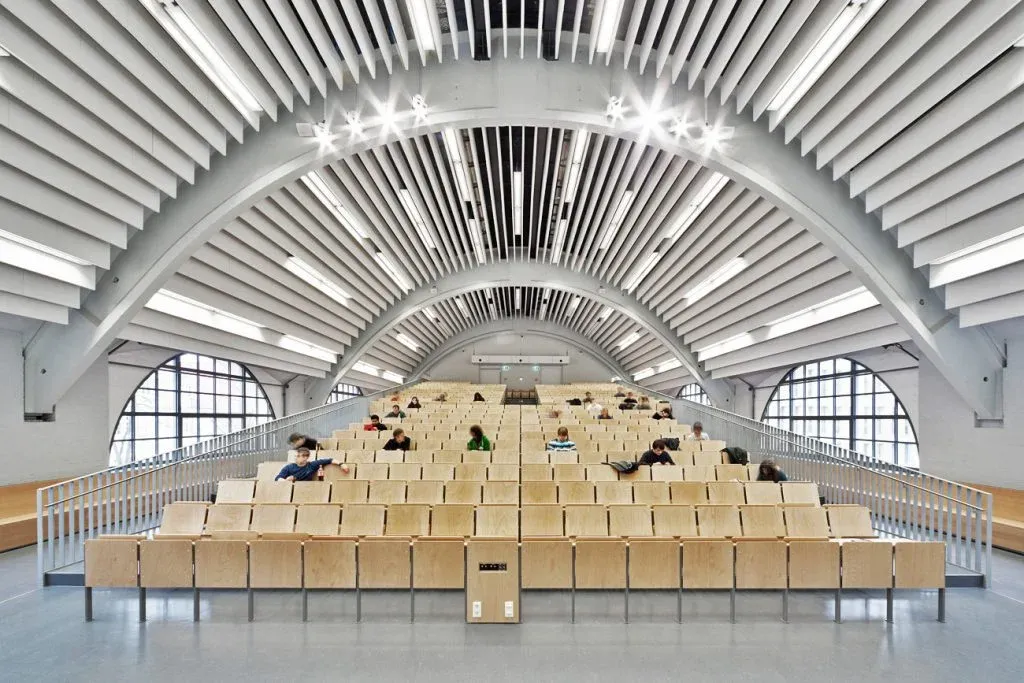
- Darmstadt. 04.05.2017. Grounds of the Technical University in the city centre. Agreement on the assignment of personality rights of the person(s) depicted; model / product release is not available. Photo: Renate Hoyer, Waldschmidtstr. 17, 60316 Frankfurt. Tel. Mobile: 0171-7992955. Frankfurter Volksbank IBAN: DE65 5019 0000 6500 9832 89. BIC: FFVBDEFF, Tax no.: 014 829 04467

LIVING CONDITIONS IN GERMANY
Germany is a highly sought-after country for Turkish citizens who want to study or work abroad. Although Germany is expensive compared with countries such as Poland and Czechia, it is more affordable than countries such as the United Kingdom, Ireland or Switzerland. However, it should be remembered that considerable price differences can be seen between cities in Germany. For example, Munich, Berlin and Stuttgart are the cities with the highest cost of living. To look at this in more detail, we can compare rental costs in three different cities. While the rent for a one-person flat in Stuttgart and Berlin is about 700-800 Euro, in Bremen this price can be about 500 Euro. Bachelor’s and Master’s education in Germany can be considered free of charge, apart from the tuition contribution fee. The tuition contribution fee is a charging system paid every semester in which students continue their education, and the fee can vary between 100 and 300 Euro. Overall, taking into account the costs of food, housing, bills, clothing and entertainment, Germany holds an average position among European Union countries. Calculated on average, the cost of food and drink can be at least 200 €, extra expenses such as internet and TV 220 €, and the rent of student housing can vary between 300 and 700 € per month. Germany currently ranks fifth among EU countries with hourly wages of 9.35 Euro.
ACCOMMODATION INFORMATION
Accommodation – Arranging accommodation is very important when planning study abroad. Taking into account our students’ requests, preferences and sensitivities on this matter, we provide solutions in coordination with our partner schools. The accommodation solutions offered to students who want to study abroad are generally as follows.
ACCOMMODATION AND STUDENT DORMITORIES
There are dormitory facilities on the university campus. In addition, students can rent an apartment or a room at affordable prices near the university.
For individuals who want to stay in a dormitory, the situation varies depending on whether it is a private dormitory or a state dormitory and also on whether it is a large city or a small city. In Germany, state dormitories cost on average around 250-350 Euro per month, while private dormitories, being more comfortable and modern, can reach 400-500 Euro. In large cities, private dormitory rents or, for those who prefer them, room rents can start from 500 Euro and rise to 700 Euro.
SCHOLARSHIP OPPORTUNITIES
After gaining a place at a university in Türkiye, are you planning to study in Germany but worried about the cost? Most universities in Germany offer education free of charge or at minimal cost. Scholarships are like an extended bonus. Here are the German education scholarships for Bachelor’s courses that you should not miss!
- Jacobs University Scholarship
- Bayer Foundation Scholarships
- Kurt Hansen Science Scholarships
- Heinrich Böll Scholarships
- Master’s Scholarships at the University of Stuttgart
YÖK Equivalence of German Universities
ALL universities and higher education institutions in Germany have YÖK equivalence.
For diplomas obtained from higher education institutions abroad to be valid in Türkiye, they must be approved by the Council of Higher Education (YÖK) and an equivalence certificate must be issued.
Basically, what this means is that the compulsory courses you took during your education, and their contents, are required to be consistent with the compulsory courses, content and workload of the same department in Türkiye. If this consistency and suitability exist, equivalence is granted to your diploma. If there is no such consistency, you may be asked to take the courses deemed missing at a university in Türkiye or to sit an equivalence exam. If you score 50 out of 100 in the equivalence exam, equivalence is granted to your diploma.
Photos and Videos
Photos and videos of this university will be added soon. Contact our advisors for visuals and up-to-date information.
Get InfoStep-by-Step Guide to Studying Abroad
You will find the information you need to prepare for university study abroad in our University Guide.
Read the guideRegister for Darmstadt Teknik Üniversitesi
Our advisors will get back to you about suitable programs, current fees and application requirements.